
How to Appraise My Art: Expert Guide to Artwork Value and Appraisal

Updated: Sep 2
A painting in the hallway, a framed drawing from an estate, or an unsigned canvas from a family home can raise a big question: what is it actually worth?
If you are searching for how to appraise my art, the answer starts before price. A proper artwork valuation looks at what the piece is, who made it, whether it is authentic, how it has survived, and how similar works perform in the market. Value is rarely based on appearance alone.
This guide explains the art appraisals process step by step for artwork with little or no known history. It also explains the difference between identification, authentication, and appraisal, which are often confused but mean very different things.

Identification, authentication, and appraisal are not the same thing
Many people start with the question, “How can I find out what my artwork is worth?” The first step is to separate three related services.
Term | What it answers | What it usually involves |
Identification | What is this artwork? | Subject, medium, age, style, school, possible artist, region, and visible markings |
Authentication | Is it genuinely by the claimed artist? | Expert review, provenance, technical evidence, catalogues raisonnés, and specialist opinion |
Appraisal | What is the artwork worth? | Market comparison, condition review, demand, sale history, and valuation purpose |
Identification may tell you that a work is a 19th-century watercolor, a European school portrait, or a print after a known artist. Authentication goes further and asks whether the work is genuinely by a named artist, studio, workshop, or follower.
Appraisal focuses on value. A professional appraiser considers all available evidence, then gives an opinion of value for a specific purpose, such as sale, insurance, estate planning, donation, or family division.
A painting can be identified without being authenticated. It can also be appraised with a value range even when the artist remains unknown, though the valuation will usually be more cautious.
Start with a careful visual inspection
Before researching databases or contacting an appraiser, document the artwork clearly. Many strong art appraisals begin with simple observations made at home.
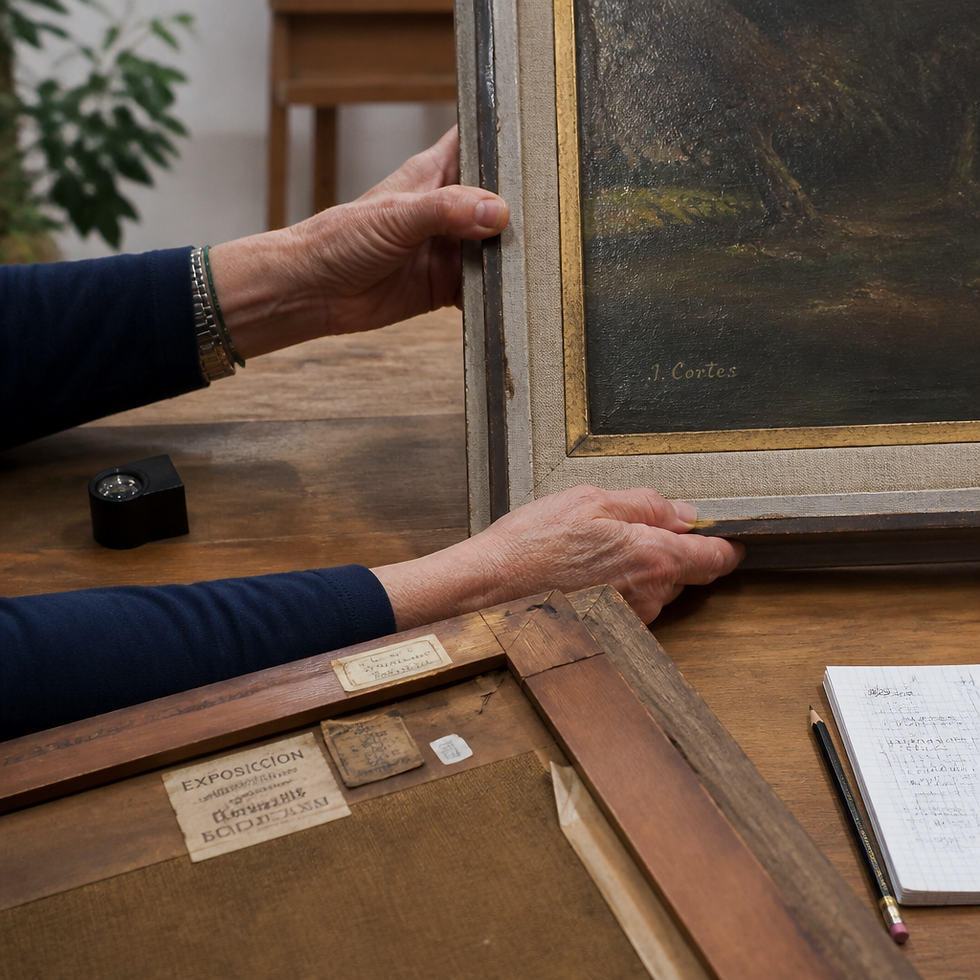
Look at the whole object, not just the front image. The frame, stretcher, canvas, paper, labels, nails, hanging hardware, and backboard can all hold clues.
Create a basic record that includes:
Full artwork dimensions, excluding the frame
Framed dimensions, if framed
Medium if known, such as oil, watercolor, pastel, ink, etching, lithograph, or mixed media
Subject matter, such as landscape, portrait, still life, abstract composition, or religious scene
Visible signature, initials, monogram, date, title, edition number, or inscription
Condition problems, including tears, stains, flaking paint, fading, warping, repair patches, or overpainting
Any labels, gallery stamps, auction tags, inventory numbers, or handwritten notes
Photograph the artwork in natural light if possible. Take one image of the full front, one of the full back, close-ups of the signature, labels, frame details, and any damage.
Do not clean, reframe, remove backing paper, or scrape at markings before getting advice. A well-meant cleaning can reduce value, especially on paintings, works on paper, and antique frames.
Research the artist, signature, and markings
Signatures can help, but they can also mislead. Artists changed signatures over time. Dealers sometimes added names later. Copies and decorative works may carry signatures that resemble famous artists.
When examining a signature, look at:
Placement on the artwork
Whether it sits naturally within the paint layer
Style of handwriting
Date or initials nearby
Comparison with verified examples
Whether the name matches the period, subject, and materials
A monogram can be harder to read than a written signature. Some markings are not artist signatures at all. They may be gallery inventory numbers, collector codes, framer notes, estate marks, or printer’s stamps.

If the artwork has a readable name, search carefully. Use several versions of the name, including initials, alternate spellings, and possible accented characters. Search with terms such as “artist,” “painter,” “auction,” “signed,” “oil painting,” or the subject of the work.
For people wondering how to appraise my art, artist research should not stop at a general web search. Market records, museum collections, gallery histories, exhibition catalogues, and artist reference books can all help build a more reliable picture.
Trace provenance and ownership history
Provenance means the ownership history of an artwork. It can be one of the most valuable parts of the art appraisal file.
Useful provenance may include:
Original purchase receipt
Gallery invoice
Auction catalogue entry
Estate inventory
Insurance schedule
Exhibition label
Letter or certificate from the artist, gallery, or prior owner
Family correspondence mentioning the artwork
Photographs showing the artwork in an earlier home or collection
Provenance does not always prove authenticity, but it can support it. A clear chain of ownership from a respected gallery, auction house, artist estate, or known collection can increase confidence.
By contrast, vague family stories need evidence. “It was said to be by a famous artist” is a starting point, not proof. A professional appraiser will consider the story, then look for documents, stylistic matches, and market evidence.
Examine condition, materials, and technique
Condition has a direct effect on value. Two paintings by the same artist can have very different prices if one is fresh and stable while the other has fading, heavy restoration, tears, or paint loss.
For paintings, appraisers look for:
Craquelure, or fine cracking in the paint surface
Flaking, lifting, or insecure paint
Canvas relining or patch repairs
Retouching or overpainting
Varnish discoloration
Frame damage
Signs of water, heat, smoke, or insect damage
For works on paper, condition concerns often include foxing, staining, fading, acid burn from old mats, tears, creases, and poor mounting.
Materials and technique also matter. An original oil painting is valued differently from a reproduction print. A hand-pulled etching differs from an offset poster. A signed limited-edition lithograph differs from a mass-produced decorative print.
If you are asking, “How do I know if my painting is valuable?” pay close attention to whether it is an original work, a print, a copy, a study, or a later reproduction. The answer can change the valuation dramatically.

Compare the artwork with auction records and market demand
After identification, condition review, and provenance research, the next step is market comparison. This is where many owners try to learn how to determine the value of my artwork.
A fair comparison looks for works that match as closely as possible:
Same artist or attributed circle
Similar medium
Similar size
Similar subject
Similar date or period
Similar condition
Similar authenticity status
Similar sale venue and buyer audience
Auction records are useful, but they need careful reading. A small pencil sketch does not compare directly with a large finished oil. A damaged work may sell for less than a clean example. A fashionable subject may bring more than a less desirable one by the same artist.
Retail gallery prices also differ from auction prices. A gallery may include framing, presentation, advice, guarantee, and time on the market. Auction prices reflect a public sale result at a specific moment, sometimes with buyer’s premium, sometimes without.
Market demand changes. Some artists have steady collector interest. Others rise or fall based on exhibitions, estate activity, supply, scholarship, or changing taste. Decorative appeal matters too, especially for unknown or lesser-known artists.
A professional valuation weighs all of this together rather than choosing one attractive online price.
Decide when to get a professional appraisal
Online research can take you far, but some situations call for expert review. If the artwork may be by a listed artist, has an old label, came from an estate, shows unusual quality, or may need insurance or sale documentation, a professional opinion can save time and reduce risk.
People often ask where to get artwork appraise when the artist, age, and authenticity are unclear. Options include independent appraisers, auction specialists, art historians, dealers in the relevant field, and online appraisal services.
For anyone asking how to get a painting professionally art appraised, prepare a clear information package before submitting it. Include:
Front and back photographs
Close-up of the signature or markings
Images of labels and inscriptions
Measurements
Known family or purchase history
Condition notes
Any documents, receipts, or prior appraisals
Your purpose for valuation, such as sale, insurance, probate, or curiosity
The purpose matters because different values can apply. Fair market value, auction estimate, retail replacement value, and insurance value are not always the same number.
A strong appraisal report should explain the basis of the opinion. It should not simply give a number. Look for reasoning that connects the artwork to evidence, comparable sales, condition, attribution, and market demand.
A reliable art appraisal is an informed opinion based on evidence, not a guess from a photograph or a single search result.
This article is for general information only. For legal, tax, insurance, or estate matters, seek advice from a qualified professional in the relevant field.
Common signs that an artwork may deserve closer review
No single feature proves value, but certain clues suggest the artwork is worth investigating.
These include:
A confident or recognizable signature
Old gallery, museum, exhibition, or auction labels
High-quality materials and skilled technique
Unusual subject matter by a known artist
Strong provenance from a collection or estate
Original frame linked to a period or gallery
Evidence of age that matches the claimed date
Comparable works with auction history
Inclusion in artist reference books or catalogues
Specialist interest in the artist, school, or movement
Unknown artists can still have value, especially when the work is decorative, historic, regional, well executed, or appealing to collectors. On the other hand, a famous-looking signature does not guarantee high value. Authenticity, quality, and market demand must align.
FAQ about art antique appraisals and artwork value
How can I find out what my artwork is worth?
Start by identifying the artist, medium, size, condition, signature, labels, and provenance. Then compare the artwork with similar verified sales. For a reliable value, ask a professional appraiser to review the evidence.
How do I know if my painting is valuable?
A painting may be valuable if it is original, well executed, signed by a listed artist, has strong provenance, is in good condition, or has comparable auction results. Value also depends on current buyer demand.
Where can I get artwork valued online?
You can request an online valuation from an art appraisal service, auction house, or specialist dealer. Choose a service that reviews photographs, markings, condition, provenance, and market comparables.
What is the difference between appraisal and authentication?
Authentication asks whether an artwork is genuinely by a specific artist. Appraisal estimates value. An appraisal may rely on an authentication opinion when authorship is central to the value.
Can an unsigned painting be appraised?
Yes. An unsigned painting can be valued by assessing age, school, subject, quality, condition, materials, provenance, and comparable market sales. The value may be broader if the artist cannot be identified.

Get a professional online art appraisal
If the artwork is inherited, unsigned, difficult to read, or possibly valuable, the safest next step is to have it reviewed by a specialist. A professional can connect the visible evidence with art historical research and current market records.
The Antique Cabinet provides online artwork identification and appraisal services for paintings, works on paper, antiques, and collectible objects. Submit clear photographs and known history to receive expert guidance on what the artwork may be, who may have made it, and what value range may be appropriate.
A good art appraisal online starts with curiosity, but it ends with evidence. Gather the details, protect the object, compare carefully, and seek professional help when the artwork deserves a supported value opinion.


Comments